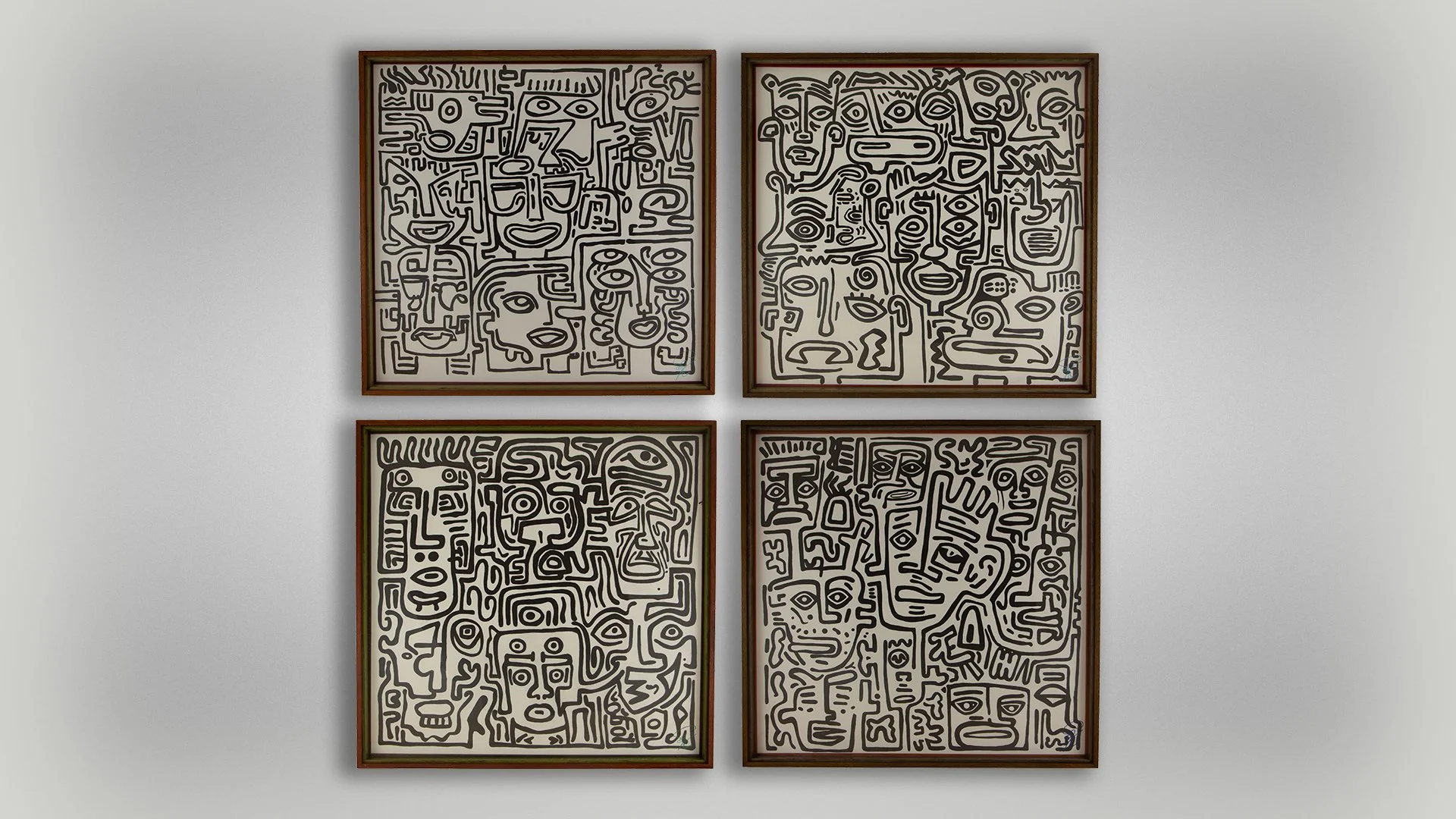
Resonant Synthax
Resonant Syntax explores the space between thoughts: the quiet territory where emotions, glances, and half-finished sentences coexist without any one voice overpowering the rest. The quadriptych shows how inner calm and inner unrest can remain present simultaneously as two layers within the same field. Emotions emerge, briefly touch one another, withdraw, and leave behind an after tone, a resonance that remains perceptible even after the form itself has dissolved.
These are moments in which one emotion can seem all-encompassing. At close range, a single look or tension feels definitive; the lines coil tightly together and suggest a tangle with no visible exit. Once the view widens, another image appears: not one dominant mood, but a sum of feelings and thoughts that alternate, intensify one another, or soften what stands beside them. Chaos then reveals itself less as an end state than as a brief condition within a larger pattern.
Here, emotions behave like language. One impulse sets the tone, a second introduces nuance, a third binds both into a broader rhythm. Some forms seem almost to want to disappear, as if startled by their own intensity and unable to take in the whole. Yet they remain part of the composition: avoidance becomes visible as a shifting movement rather than an erasure. The spaces between the lines do as much work as the ink itself; they mark the pauses in which meaning can rearrange before the next thought arrives.
Resonant Syntax suggests that clarity rarely emerges by fighting a feeling, but by seeing it in relation to what stands beside it. Attentive awareness, free of hurried judgment, allows patterns to surface that at first felt like mere noise. What once felt constricting becomes more bearable when it can be read as part of an ongoing current. Difficult emotions begin to register as passing waves within a larger whole.
In this way, an inner syntax becomes tangible: a quiet structure in which calm and unrest are allowed to exist side by side. From that interplay arises a form of peace grounded not in control, but in the understanding that every emotion may take its place without having to become the entire sentence.
-
Year: 2025
Paper:
Materials: Black Marker
Size: 50×50cm
-
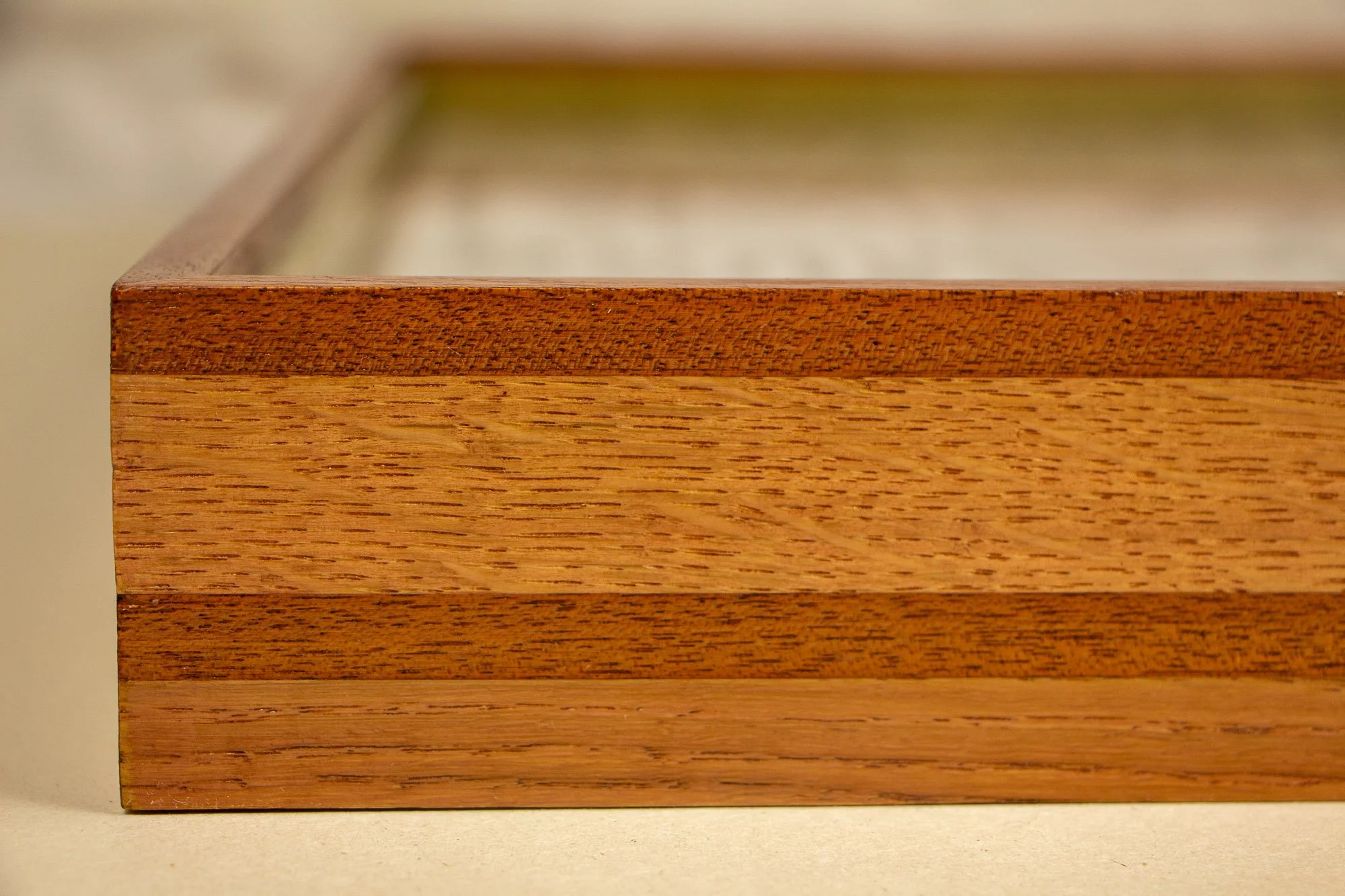
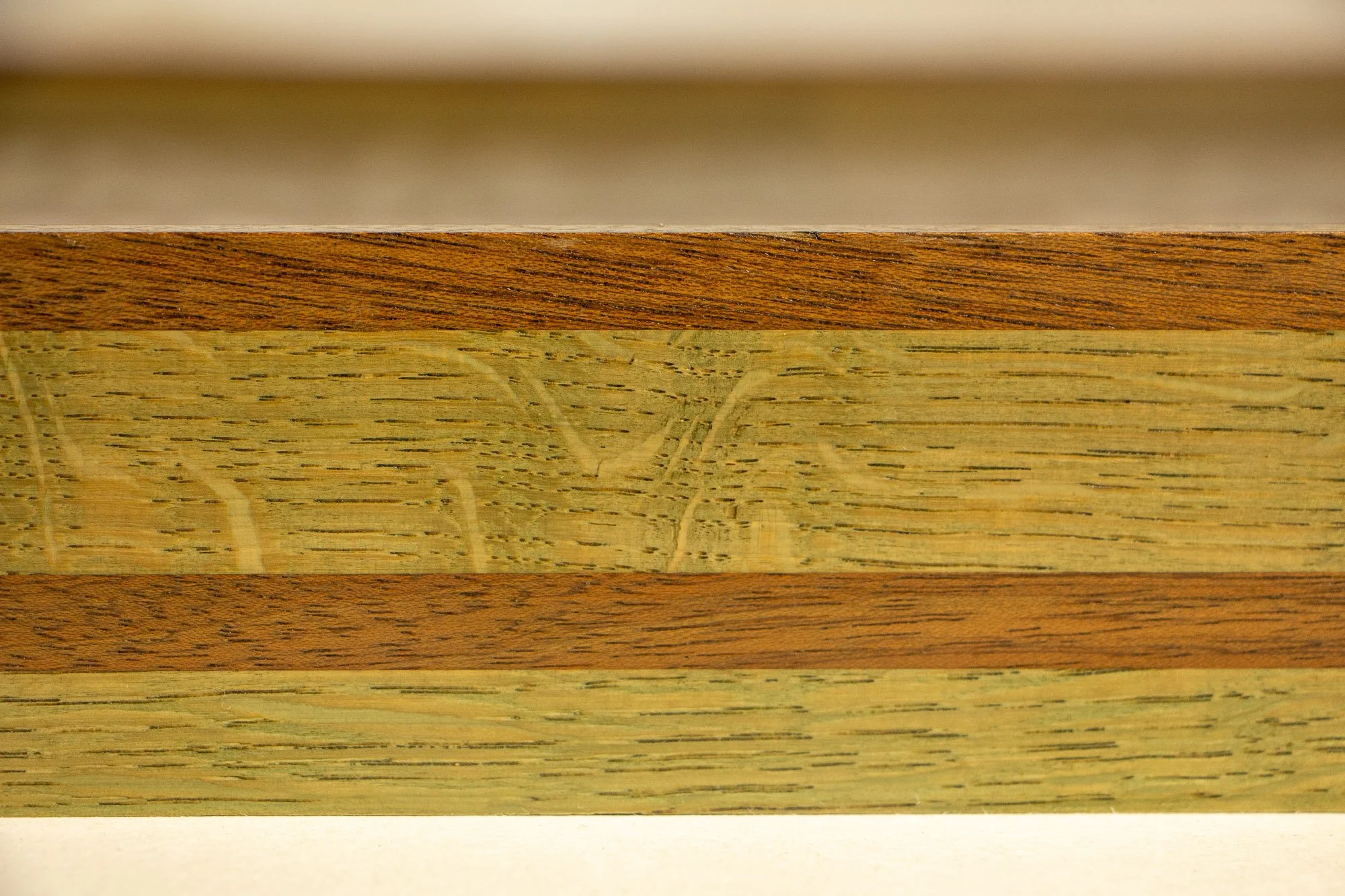
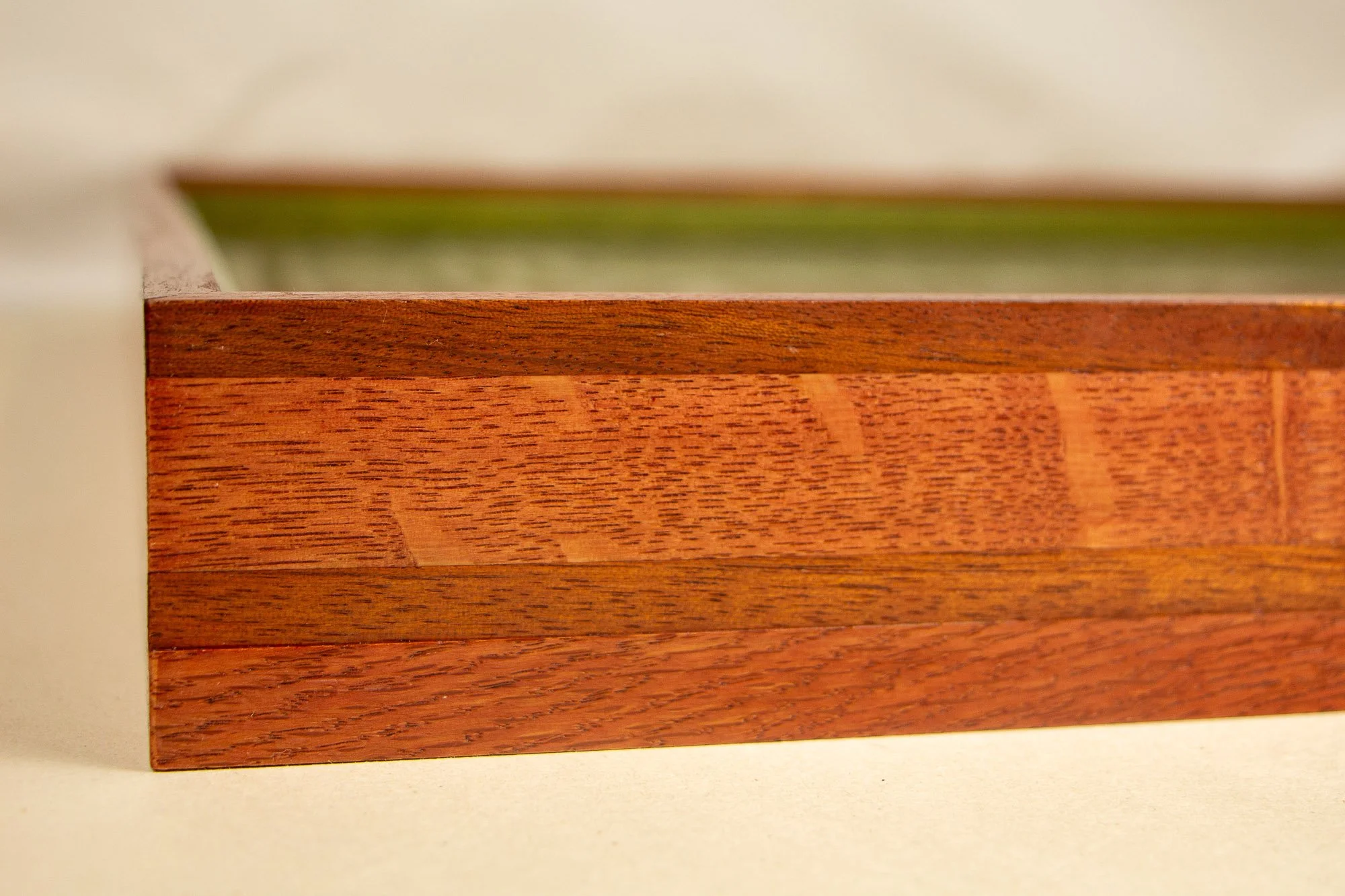
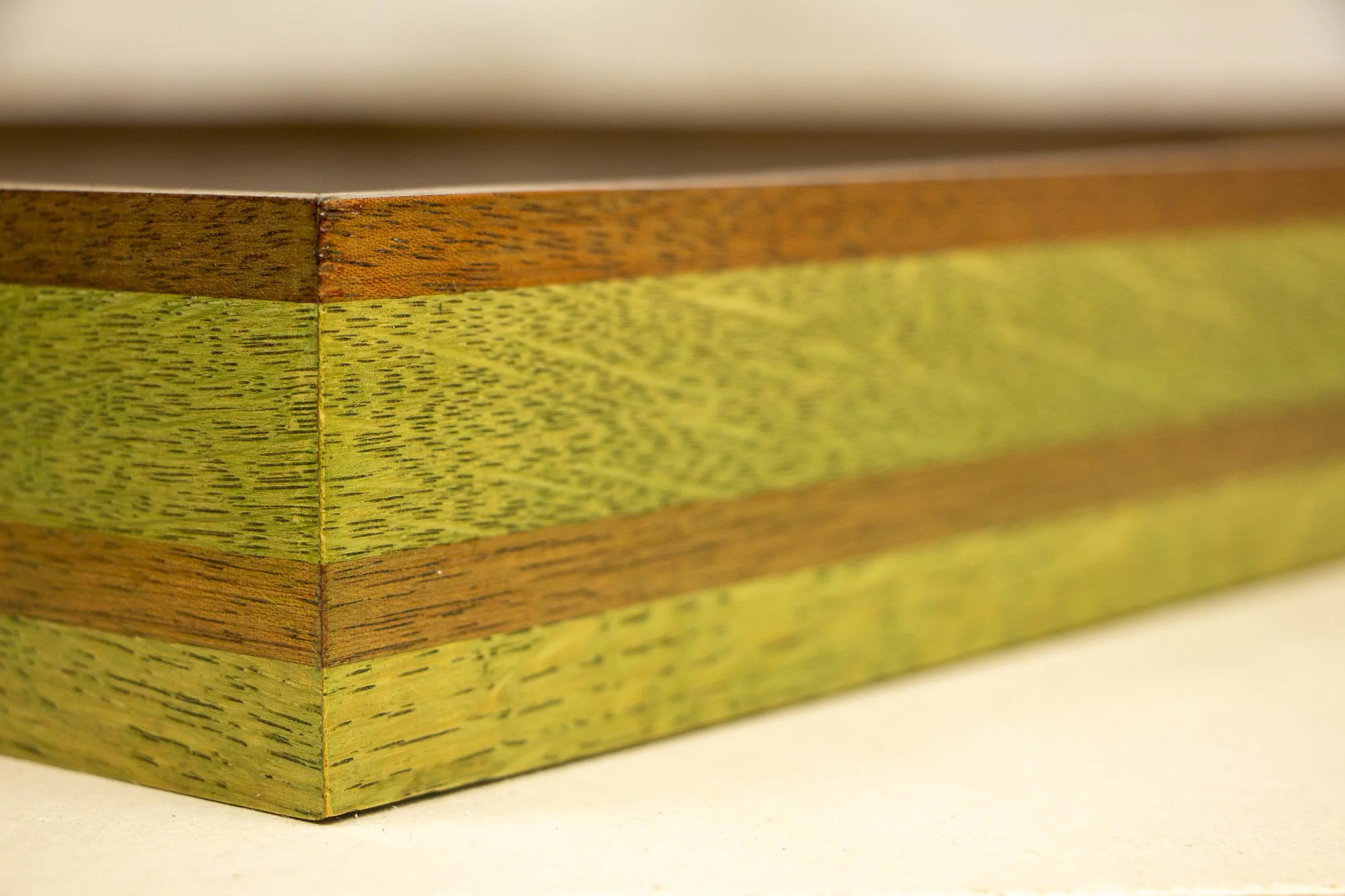
Each drawing is framed in a shifting triad of color. One moves through pink, mint, and blue; the next through mint, blue, and pink; the third through red, green, and granada; the fourth through green, granada, and red. The sequences repeat with subtle reordering, so that the same tones speak in different accents from frame to frame. In that way, the frames echo Resonant Syntax itself: a structure in which elements remain distinct, yet gain new meaning through proximity, variation, and rhythm.
Wood Recipe:
Mahogany Frame body: 71.0 × 1.0 × 0.9 cm — 32 pcs
Oak Frame body: 71.0 × 2.5 × 0.9 cm — 16 pcs
Oak Frame body: 71.0 × 1.5 × 0.9 cm — 16 pcs
Oak Glass lip: 71.0 × 2.0 × 0.6 cm — 16 pcs
Oak Spacer: 71.0 × 2.0 × 0.4 cm — 16 pcs
Oak Backing rim: 71.0 × 1.2 × 0.9 cm — 16 pcs
Meranti plywood Back panel: 50×50×0.36 cm — 4 pcs
Finishes:
Framework: multiple coats of 2K PU lacquer (high-gloss and satin)
Back panel: multiple coats of clear Ruwa marine varnish
Glazing:
Acrylic glazing: clear, opal, anti-reflective Gallery® (UV-protected)
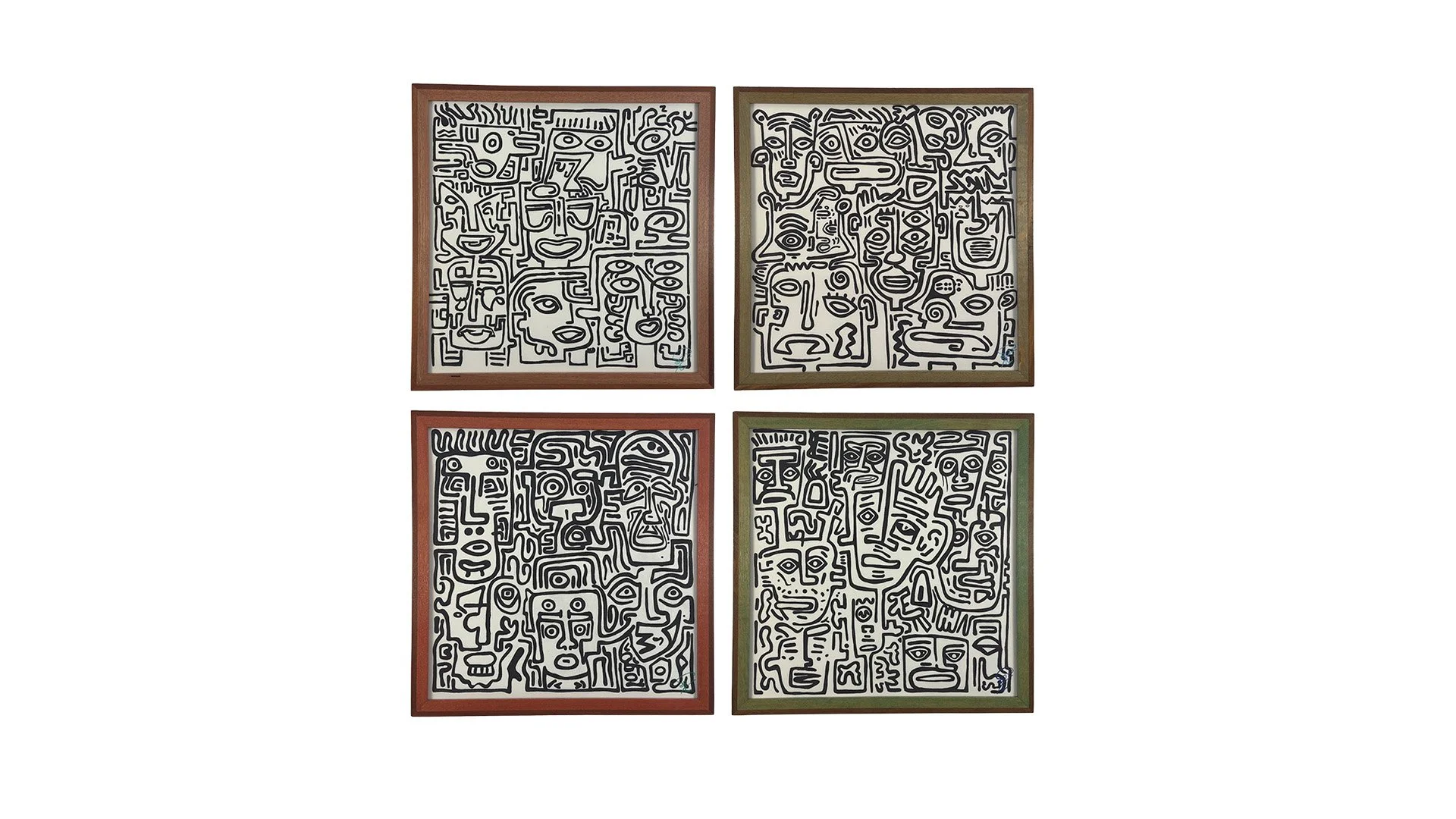
Collect the complete Resonant Synthax series (4 artworks) at a special bundle price. Each piece is a 50 × 50 cm museum-grade giclée on Hahnemühle FineArt 290 g/m², signed in Posca marker and individually numbered in a limited edition of 50. Every artwork includes a unique Certificate of Authenticity.
Free shipment.
Frames not included.